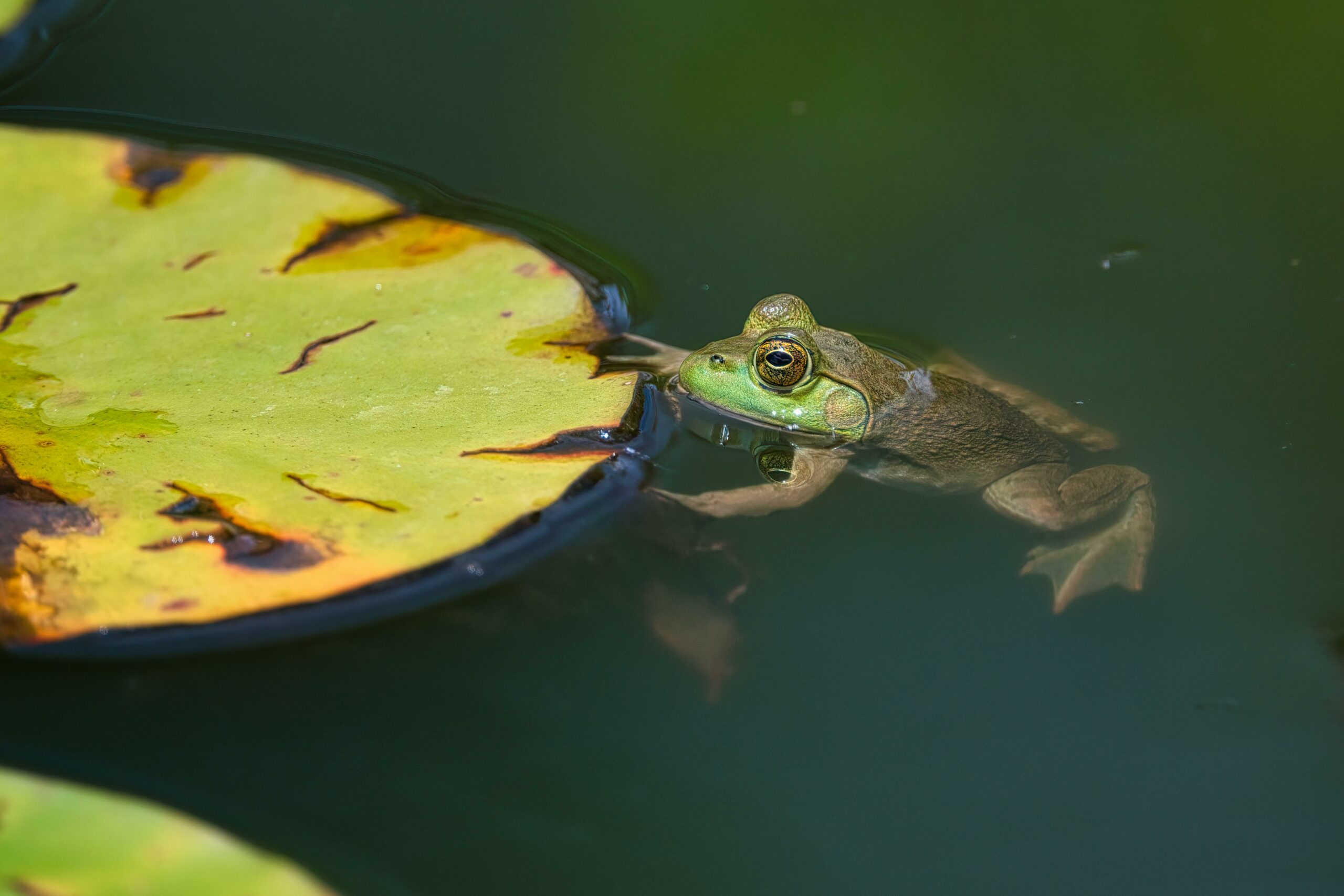
On the Emerald Isle of the world, past the harbors of Howth just south of the Kylemore farms—which usher goat cheeses from pastures to plates—and north of the Galway bay, hills rolled towards a shallow bluff and the tallest and nearest hill to the shore bore a small stream that broke among the stumps and roots of old pines. The bundle of trees diffused the pine aroma with the seawind, sheltering the good people of the hill. Every night, rain or shine they would sing from the trees’ hollows, croaking the merry tales of their exploits and their forefathers’ exploits. These good people were the rana temporaria of Ireland, the faeries that once disguised themselves as frogs and forgot how to turn themselves back.
At dusk, they gathered within a roots’ hollow. A great room with floating wisps of light big as a mote of dust, yet sizable enough for the frogs, and the walls were decorated with stolen wool and silk from weavers of Connemara. They drank the black stout of stream water, bewitched by the fae magic to be beer.
Standing on of the tables the oldest of the frogs spoke, “I say c’mere to ya, and I remember our forefathers of Tuatha De Dannan!
“Do yeh?” the throng asked with joy.
The old frog ran his hand across a beard of growing moss and croaked, “T’was always told to me, and told me by many voices, one of which was a fella who thought I wer’nt a Tuatha De Dannan, but I say I am. That no good story without a good fella ever told without a moral behind why it was told or how, and otherwise it’d be quite a boring story. If that is it was ever a story to begin with, I say, and not just a slagging thought.”
“Get on with it!” The throng yelled.
“I say, that no good person here is no less than our mighty Cu Chulainn, I say to ye. I know this true because of my adventures, to say that I think I am a strong fello, you’d believe me well enough by the words that I say because no mortal man ever done as much as me–by that right I see we as just right like them old spirit’s well.” The old frog pointed his walking cane out like a sword, he continued. “I tell ya, I once slew a proper warrior good enough to give the mighty Cu Chulainn a proper fright, and by that I tell ya no banshees or likes of our kin could shed a word at my greatness—because it was right. In seeking glory I set out to the scattered isles of our western shores, and for that I never thought too much about the eastern shores neither—given I do like the glendalough loch. As I had well enough met the strongest fellos from the western hills and brooks, and I tell ya, I tell it proper without a joke. They were easy pickings for the strength of a frog. I tell ya, we are different cause the western folk can scrap and slew enough of what I seen.”
“Can they?” The frogs croaked.
“Of course they can!” the old frog smiled. “Cause I did myself! And in such a way that an island made way to move proper far from the mainland. On the shore I wandered in my youth, I tell ya, searching for a dear tale to tell in my old age, wandering with my sole companion—the greatsword of MollyCullen bogswood. Steel wrought blue by the water, and I tell ye, the blade double my size granted might by the water hags of five points across the lands. I ought to still have the sword today if it weren’t for the giant I slew, matter that I still have the hilt here, as it makes a proper companion to a good person as any.”
The old frog gestured towards his walking cane, and continued. “I say, I found at first from the distance titans larger than any giant I’ve witnesses on this earth, so with some great deal of curiosity I thought the likes of them were worth seeing. There they were, with bronze medals dangling. They saw me, small as the crumb of stale bread in their eyes, I say, the largest moved forward with tremors beneath his feet. A giant whose name I will not speak once nor twice because no good fello shall ever need know the names of which, less they feel their calling back to the green isle of ours. He says to me, ‘Don’t suppose yer right to be here little frog.’ I says back, ‘who’s to say I’m sposed’t be anywhere but I? I am a mighty warrior ye hear.’ and to that he says ‘you seem mighty small if anything, I’ll be killing you now by the way.’”
The room went quiet in anticipation, and the old frog held onto that silence for only a moment, “but when the giant leaned over to get a proper look, I jumped with all my might and my sword true! Cutting through his eye with such force that the shattered bones of his head made mountains in the sea. In great fright, the giants of the isle picked up their island and marched off into the sea, never to be seen again. Somewhere in the bone laden sea the half of my faithful companion now rests, I tell ya, damning the giants to never return. Let it never be said that the frog is of small strength for its stature, is all.”
All frogs cheered as good people, drinking heavily their stouts in delight, and the old frog was happy for his youth.
Dylan Germann is an aspiring writer and ceramicist, he has written a number of non fiction and fiction publications ranging from Americana to Irish Folklore, and ecological journalism. His relationship to frogs has been seen in the past through bull frog inspired Americana pottery, and presently it is expressed through the Irish belief that frogs are the wee faeries in disguise.